
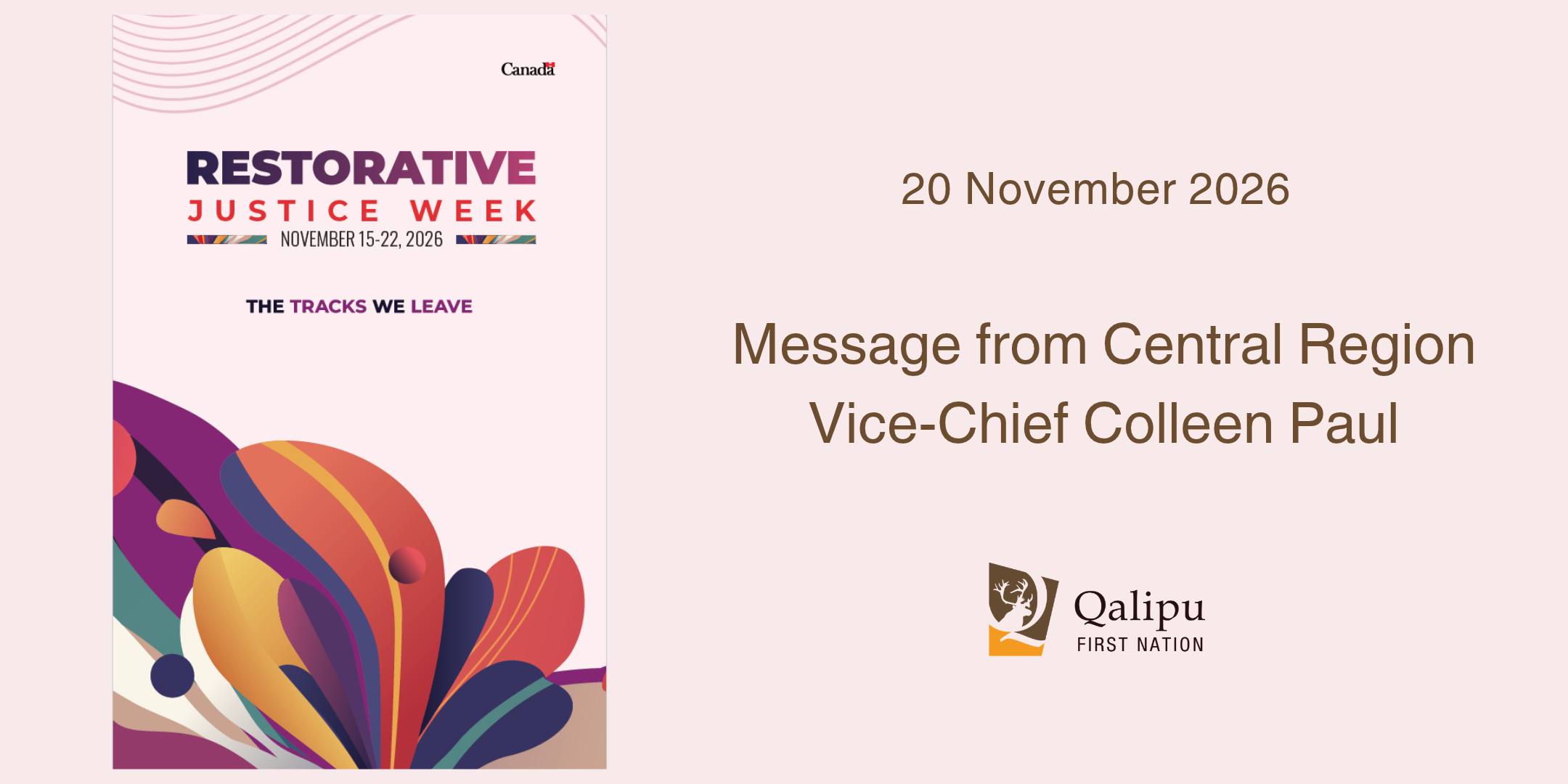
This week, as we recognize Restorative Justice Week, we want to reflect on what restorative justice means to us as Mi’kmaw people, not only within the justice system but in how we live our lives, treat one another, and care for our communities.
For our ancestors, restorative practices were a way of life. Long before formal justice systems existed, our people understood the importance of relationships, accountability, respect, forgiveness, and restoring balance when harm occurred.
Restorative justice is often associated with the courts and criminal justice system, but its principles reach far beyond those institutions. They are reflected in how we raise our children, resolve disagreements, support families, address conflict in our workplaces, and respond when relationships are damaged within our communities.
At its heart, restorative justice asks us to consider three important questions: Who has been harmed? What do they need? And what responsibilities do we have to help make things right?
Through my involvement in restorative justice initiatives and advocacy, I have come to appreciate that some of the most meaningful opportunities for healing happen outside formal systems. They happen when we take the time to listen, when we acknowledge the impact of our actions, when we approach difficult conversations with compassion, and when we make a genuine effort to repair relationships.
Our Mi’kmaw teaching of Msit No’kmaq — All My Relations reminds us that we are all connected. Our words, actions, and decisions affect not only ourselves but also our families, neighbours, and communities. With that connection comes responsibility.
Restorative practices do not mean overlooking wrongdoing, avoiding difficult conversations, or expecting those who have been harmed to simply forgive and move on. They mean creating opportunities for accountability, understanding, healing, and change while respecting the needs, choices, and safety of everyone involved.
As Mi’kmaw people, we have teachings that can guide us in this work. Our Elders and Knowledge Keepers remind us of the importance of listening, humility, respect, and caring for one another. These teachings are just as relevant today as they were for our ancestors.
I believe restorative justice begins with each of us. It begins in our homes, around our kitchen tables, in our workplaces, and throughout our communities. It begins when we choose understanding over judgment, accountability over blame, and meaningful dialogue over division.
During Restorative Justice Week, I encourage everyone to think about how we can bring these principles into our everyday lives.
Restorative justice is more than a process or a program. It is a way of being, a way of relating to one another, and a commitment to creating healthier relationships and stronger communities.
Wela’lioq,
Colleen Paul
Central Vice-Chief, Qalipu First Nation