DSC_0004
Former CAP National Chief Dwight Dorey and Qalipu Chief Brendan Mitchell take a stroll along the Corner Brook Stream Trail during a visit to Newfoundland in 2016

Message from the Chief – May 25 2018

It is with great sadness that I share news of the passing of former National Chief Dwight Dorey.  Dwight was a friend to me, and a strong supporter of the Qalipu First Nation during his time as National Chief of the Congress of Aboriginal Peoples, and over the years as an advocate for the Indigenous people of Canada.

On behalf of Qalipu First Nation, its council, staff and membership, we express our sincere condolences to members of Dwight’s family and wish them comfort at this time.

Dwight will be sadly missed by all who knew him.

-Chief Brendan Mitchell

Read about Dwight Dorey’s life, and contribution to Indigenous advocacy in Canada:

Windspeaker News, May 24, 2018 Former National Chief Dwight Dorey has passed away
http://www.windspeaker.com/news/windspeaker-news/former-national-chief-dwight-dorey-has-passed-away/
The word NEWS written in vintage wooden letterpress type in a wooden type drawer.

Wells/Wells Court Ruling and Next Steps

A recent Federal Court ruling that is relevant to some 50,000+ applicants who were denied Founding Membership to the Qalipu First Nation after failing to meet the self-identification requirement was recently handed down by Justice Russell W. Zinn.  The case was between Sandra and Dave Wells, Canada and the Federation of Newfoundland Indians (FNI) and related to the Self-Identification criterion of the Qalipu enrolment process, the right to appeal for applications denied on this criterion, and the validity of the Supplemental Agreement.

In summary, Justice Zinn ruled that:

  • The FNI and Canada acted within their legal rights to amend the 2008 Agreement for the Recognition of the Qalipu Mi’kmaq Band through the introduction of the Supplemental Agreement. Amendments that corrected errors in the Agreement, or extended timelines, for instance, required only that the parties agree on the amendment and did not require ratification.
  • The FNI and Canada did not introduce the Supplemental Agreement for “the improper purpose of pre-emptively limiting the number of potential band members who would be entitled to registration.”
  • There were parts of the Supplemental Agreement that did not fit within the parties right to amend without ratification and thus the judge deemed unreasonable:
    • Removal of the right of appeal for applicants denied on the Self-Identification criterion
    • Evidentiary documentation supporting an applicant’s self-identification should have been based on the date of Qalipu’s formation, rather than the date that the Agreement for the Recognition of the Qalipu Mi’kmaq band was signed by Canada and the FNI.
  • The types of evidence required to show self-identification, and the requirement for this type of evidence on an applicants file, was reasonable and fair.
  • The timeline to respond to the Supplemental Agreement was fair and applicants were not denied procedural fairness.
  • Charter rights were not breached in the introduction of the Supplemental Agreement.

The next steps Canada and the FNI will take following receipt of the Federal Court decision have yet to be determined.   Once the parties have had the chance to meet, and discuss next steps, more information will be communicated on the path forward.

For a better understanding of this case, please click here to read additional information in Outcomes from the Recent Court Ruling Involving Dave Wells, Sandra Wells, Canada and the FNI.

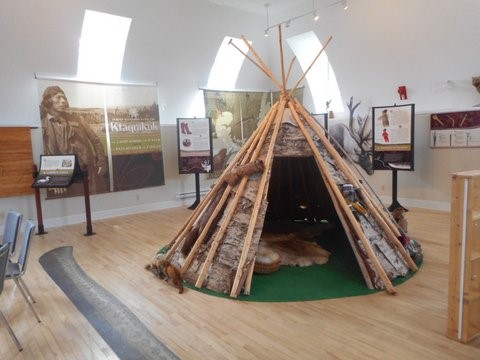
Wigwam

Wanted: Your Indigenous Art Work

The Ktaqmkuk Mi’kmaq Museum in St. George’s is preparing to open for the season and would love to showcase local traditional art work in their gift shop.

If you’re an artist with work to sell, please contact St. George’s Indian Band Chief Marlene Farrell at (709) 647-3293 or email marlene.farrell@hotmail.com

Have you visited the museum yet?

Housed in a fully restored 19th century courthouse, this museum is a must-see.  As you read the plaque text you’ll learn about our province’s Mi’kmaq history.  While you’re there, get your picture taken inside a reproduction of a Trapper’s Lodge, beside Mattie Mitchell, a world renowned Mi’kmaw guide, or in front of the scale model replica of a 5-meter-long ocean going canoe that the Mi’kmaq used to travel to our island.

Activities will be planned for the summer.  Keep an eye on their website here: http://www.sgibnl.ca/ktaqmkuk-mikmaw-cultural-historic-museum-newfoundland/

RfCPP Report Featured Image

Removal of Natural Obstructions to Improve Atlantic Salmon and Brook Trout Habitat in Western NL

Flat Bay Brook and Harry’s River are popular Atlantic Salmon and Brook Trout fishing systems in western Newfoundland. As of July 2014, the retention level for Atlantic Salmon on these systems was increased from two to four fish (DFO 2014). Increased fishing pressure may slow or prevent future population growth. Furthermore, large expanses of breeding habitat along Flat Bay Brook and Harry’s River tributaries are inaccessible due to natural obstructions. Active and inactive beaver dams coupled with low water levels can prevent the upstream migration of Atlantic Salmon and instream migration of Brook Trout (Collen and Gibson 2001, Mitchell and Cunjak 2007, Taylor et al. 2010). These obstructions can prevent Atlantic Salmon from accessing upstream spawning habitat, while simultaneously increasing competition for downstream spawning habitat. We propose the removal of natural obstructions along the Sheep Brook, Cold Brook, and Ahwachenjeech tributaries, which will restore natural riverine flow conditions and open approximately 4.5 km of benthic habitat. These restoration activities will increase Atlantic Salmon spawning habitat, allow the in-stream migration of Brook Trout, and will promote sustainable recreational fisheries in western Newfoundland.

The results of this project will be used to determine the short term effects of removing natural habitat obstructions on river health and population dynamics of Atlantic Salmon and Brook Trout. Periodic monitoring beyond 2015 will determine long term benefits of removing natural obstructions. This project aligns closely with conservation projects headed under Qalipu Mi’Kmaq First Nation Band’s Aboriginal Fisheries Strategy. Mi’kmaq Alsumk Mowimsikik Koqoey Association (MAMKA) has worked closely with Aboriginal Fisheries Guardians to protect our watersheds from illegal activities, while improving stewardship through river side clean ups and Atlantic Salmon redd, benthic habitat, and obstruction monitoring. This project also aligns closely with MAMKA’s Aboriginal Funding for Species at Risk projects, including monitoring the distribution and abundance of American Eel and Banded Killifish in Newfoundland.

The word NEWS written in vintage wooden letterpress type in a wooden type drawer.

Indemnity Agreement Explained

An indemnity agreement is a common element of a legal contract between two parties.  It specifies that one party (the indemnitor) agrees to pay for potential losses or damages incurred by the other (the indemnitee) that may come about as a result of the execution of the contract.

The word indemnity simply means protection from, or compensation for losses incurred.  Such an agreement outlines who will bear the cost.

In the case of the Indemnity Agreement between the Government of Canada, the Federation of Newfoundland Indians, and the Qalipu First Nation, linked below, the Government of Canada agreed to bear any costs that could potentially arise from court actions regarding the implementation of the Supplemental Agreement.

The Supplemental Agreement was signed in June 2013 to resolve issues which prevented conclusion of the Qalipu enrolment process.  For instance, the timeline for review of applications as set out in the Agreement in Principle, was about to expire leaving some 70,000 + applications outstanding.  The Supplemental Agreement provided an extension and the needed resources to review all applications.

By the time the Supplemental Agreement was signed, the Qalipu First Nation had been officially recognized as an Indian Act Band.  Qalipu owned office buildings, was providing employment for many people, it managed large budgets for programs and services, and it represented more than 24,000 status members.  From the point of view of the Qalipu First Nation, who now had much to lose, an indemnity agreement was a very important and responsible decision to make before signing any agreement.

The Indemnity Agreement protects Qalipu from possible financial ruin, from the loss of everything that has been built.

In a recent story published by CBC’s Nic Meloney, for instance, Meloney commented on a potential class-action lawsuit.  The article stated, “If successful, the case will see applications of those involved in the lawsuit reviewed under the original criteria and the potential for Canada to pay damages up to $600 million.” The Indemnity Agreement protects the Qalipu First Nation should the courts make such an award.

As litigation over issues with the enrolment process play out in court, the potential losses are far greater now than they were in 2013, making the Indemnity Agreement more important than ever.

In keeping with our mandate of openness and transparency, all members are encouraged to review the Indemnity Agreement.

Please click here to access the Indemnity Agreement.

Group of six boys, team sitting on the grass with balls happy and smiling, on sunny summer day

Aboriginal Sport and Recreation Circle NL (ASRCNL) Basketball ID Summer Camp

Lead Coaches:

Peter Benoite – Memorial Men’s Sea Hawks Varsity Head Coach

          Doug Partridge – Assistant Technical Director, NLBA

Eligibility;

Male: Aboriginal status or * self identified, born 2001-2003 or 2004-2007.

Female: Aboriginal Status or * self identified, born 2001-2003 or 2004-2007.

*Self identified athletes may not have official status (ie Qalipu rejection) but still have              documented family linkages confirming their Indigenous ancestry.

Date: July 10-12, 2018

Location: Sir Wilfred Grenfell College, Corner Brook NL

Registration Deadline: June 30, 2018. Please note there will be a cap of athletes per group as camp space is limited and will be determined on a “first come, first serve” basis.

Registration Fee:           $25.00

Schedule:  2 training sessions per day over 3 days (detailed schedule available by July 4).

Registration Procedure:
Please complete the accompanying registration form and attach with cheque/money order made payable to:   ASRCNL

Mail Registration forms to:

 ASRCNL
Provincial Training Center
P.O. Box 338
Goose Bay, NL
AOP 1CO

For further information, please contact:
Mike Alexander 709-643-3130, e-mail: bsgasrc@nf.aibn.com
Todd Winters  709-896-9218, e-mail: asrcnl@nf.aibn.com

Click here for the registration form

Magnifying glass over a newspaper classified section with Job Market text

Canada Summer Jobs 2018 hiring season kicks off with 742 jobs available for students in the Long Range Mountains

Government of Canada funds work experience for local students

April 26, 2018 Corner Brook, NL Employment and Social Development Canada

A strong middle class and a growing economy depend on young Canadians getting the skills and work experience they need to succeed. That is why the Government of Canada has doubled the number of jobs created through the Canada Summer Jobs program since 2015, creating meaningful, paid work experience for almost 70,000 students per year.

Here in the Long Range Mountains, that means that 742 jobs have been approved for funding for local students. Today, Gudie Hutchings, Member of Parliament for the Long Range Mountains, on behalf of the Honourable Patty Hajdu, Minister of Employment, Workforce Development and Labour, announced that the hiring season for Canada Summer Jobs 2018 has begun and employers are now accepting applications.

Once again this summer, tens of thousands of students across Canada aged 15 to 30 will get a great job opportunity—all while earning money to help pay for next year’s tuition. The Government of Canada invites young Canadians to visit Canada.ca/Canada-Summer-Jobs to connect with employers who are hiring in their communities. This year, for the first time, students can search for employers by province or territory, municipality or postal code, so they can apply to employers in their community.

Additionally this year, more than 3,000 employers are first-time funding recipients, ensuring thousands of fresh new experiences for young Canadians. This year’s jobs fulfill five national priorities, designated by the Government of Canada, including:

• employers who intend to hire youth from underrepresented groups, including new immigrant youth and refugees, Indigenous youth, youth with disabilities and visible minorities;
• small businesses, in recognition of their contribution to the creation of jobs;
• organizations that support opportunities for official language minority communities;
• organizations that provide services and/or supports to the LGBTQ2 community; and
• organizations that provide opportunities in science, technology, engineering and mathematics and information and communications technology, particularly for women.

A summer job helps students gain new skills and valuable work experience while saving money for the school year ahead. Thanks to Canada Summer Jobs, young Canadians from across the country will be able to access thousands of job opportunities with small businesses, not-for-profit organizations and the public sector.

Quotes

“Canada’s young people are not just the leaders of tomorrow—they are leaders today. That’s why our government is focused on ensuring more young Canadians get the skills and training they need to thrive. By helping more young Canadians get paid, meaningful work experience, we can ensure they have a fair shot at success.” – The Honourable Patty Hajdu, Minister of Employment, Workforce Development and Labour

“I am proud that the Canada Summer Jobs program is helping to create job opportunities for youth in the communities of the Long Range Mountains. The skills that our young people will gain from the summer jobs will be important for their future careers, and allow them access to mentorship and valuable work experience.” – Gudie Hutchings, Member of Parliament

Quick Facts

• Not-for-profit employers are eligible to receive funding for up to 100% of the minimum hourly wage. Small businesses with 50 or fewer employees and public-sector employers can receive up to 50 percent of the minimum hourly wage.
• Canada Summer Jobs is part of the Government of Canada’s Youth Employment Strategy. Since 2005, the Youth Employment Strategy has helped over 900,000 young people gain the skills and work experience they need to find and keep good-quality jobs.
• Each year, the Government invests over $330 million in the Youth Employment Strategy. Budget 2016 announced an additional investment of $339 million over three years. This was followed by an additional investment of $395.5 million over three yearsin Budget 2017. These investments are helping: o more than 33,000 vulnerable youth develop the skills they need to find work or go back to school; o create 15,000 new green jobs for young Canadians; and o provide over 1,600 new employment opportunities for youth in the heritage sector.
• In 2017, the Government of Canada helped create nearly 70,000 summer job opportunities for students, which is double the number of jobs created through CSJ in 2015.
• Budget 2018 announced an investment of $448.5 million over five years to the Youth Employment Strategy. This funding will support the continued doubling of the number of Canada Summer Jobs opportunities in 2019.

Contact
Joanne Gillis
Corner Brook Constituency Office
49-51 Park Street
709-634-7540

newsletter_image2

Maw-pemita’jik Qalipu’k April 2018 Newsletter

Kwe’

Welcome to the latest edition of Maw-pemita’jik Qalipu’k, (translation: the caribou are travelling together).

The way of the caribou is to work together, travel together, and support one another in the herd.  It is this quality that we can all embrace as we work through a difficult moment for our people; the Qalipu enrolment process has left families feeling divided, grassroots people excluded from something they worked to create, and Indigenous veterans denied membership for reasons they feel were beyond their control.   On page One, you’ll find a link to a video that shares not only the public rallies in support of Qalipu applicants that took place across the nation on February 24, 2018, but also shares some our struggles and personal stories.

I would also like to bring your attention to information and recruitment sessions that are happening across the province next week.  The Black Bear Program is a summer employment program that combines Indigenous culture and teachings with basic military training.  The six-week program pays really well, and all expenses including travel, accommodations and meals are covered! Tell a young person in your life about this opportunity and get them registered for a session in their area.  Find all the details on page Four.

It is always wonderful to hear news from the communities and this month we have four full pages of happenings! Please enjoy the variety of news, success stories and upcoming events submitted by our readers and community groups.  Keep it coming, we aim to connect our dispersed communities and appreciate your input greatly.

Have you heard the story of a family nine “Wandering Indians” who perished on the barrens near St. George’s (Indian Cove, the earliest recorded Mi’kmaq settlement in Newfoundland) in 1862? Co-authors Len Muise and Melvin White want to make sure we don’t forget them, and that we honour the lives of our nomadic ancestors.  Find this beautiful story on page Thirteen.

Thanks so much for reading and please, stay in touch.

Alison