March 6 (2)

Message from Chief Jenny – March 6, 2026

This week’s announcement about the Bay du Nord project and the benefits agreement between the Province and Equinor marks an important moment for our province. Projects like this have real implications for the future of offshore work in Newfoundland and Labrador, and for the workers and families who rely on that sector.

Many of our own people work in the trades and offshore, and many of us have built our lives around that work. My own experience in the trades taught me just how much major industrial projects can mean for workers, families, and the communities that depend on them.

As this project moves ahead, it’s important to us that Indigenous people are meaningfully included, and that our members have real opportunities to take part in the jobs, contracts, and economic activity that come with projects of this scale.

As your Nation, our priority is to lead projects in a way that balances economic growth with environmental responsibility. By uplifting traditional knowledge and community voices, we can help ensure that development is done responsibly, protecting our lands and waters for future generations.

We continue to invest in our people. Every year, we put significant resources into education, training, and workforce development so our members can build careers in offshore energy, marine services, and the skilled trades. We’re also exploring partnerships with industry to help strengthen the workforce needed for future growth here in Newfoundland and Labrador.

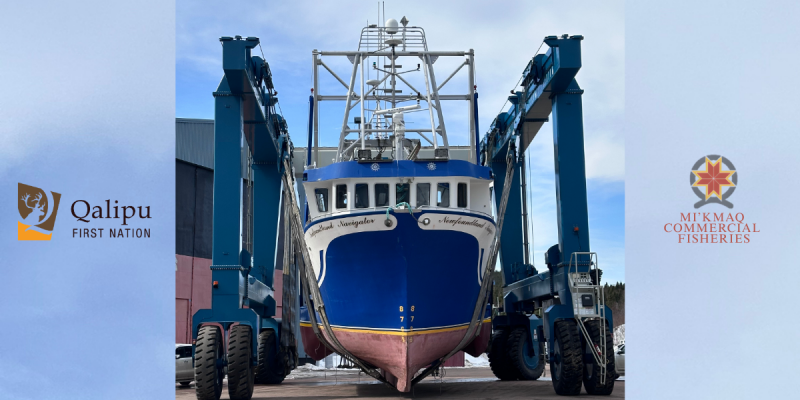
We’re investing in the marine sector as well. Newdock, Canada’s first Indigenous‑owned shipyard, is positioned to support offshore development through fabrication, maintenance, and other marine services. As offshore activity increases, facilities like Newdock can play an important role in supporting the work that surrounds major projects, including barge construction, maintenance, and other essential services.

Projects like Bay du Nord have the potential to create benefits across many sectors and throughout the supply chain. Our focus is making sure we, as a people, are ready and well positioned to take part in those opportunities as they come, while leading in a way that respects both our environment and our communities.

Feb 27v2

Message from Chief Jenny – February 27, 2026

This week, Memorial University released its Indigenous Verification Policy. This has been an important topic of conversation in our community ever since the departure of their former President, when the university publicly committed to “doing better.” When institutions speak of Indigenization and building policies that concern our communities, it can sound hopeful. However, hope only means something when it is executed with respect and accountability. While efforts have been made to improve relationships between academic institutions and First Nations, Inuit and Métis nations, we continue to see examples where universities create policies but resulting practices do not align with the very words of the institutions that write them.

We have experienced this with MUN’s compliance with its own research policy, where the governing bodies and processes of Section 35 Rights-Holding First Nations in Ktaqmkuk are often bypassed. Researchers choose convenience over proper protocol during research in our territory. During the development of the Indigenous Verification policy, MUN relied on a few recorded conversations, which do not constitute meaningful consultation with our Nation. This approach falls short of the standard of engagement we expect with our Council and membership.

I also want to be clear about something that matters deeply to us in relation to this newly adopted policy: we do not speak on behalf of the Innu or the Inuit of Labrador, nor do they speak for us. Doing so would be extremely inappropriate and disrespectful. Their identities, histories, and territories are their own. We respect them as distinct Indigenous peoples with their own governance. We have enough experience with governments deciding who we are to know the harm that causes.

For many of our families, the struggle to hold onto identity has been painful and complicated. Some of our ancestors hid who they were to protect their children. Others held on stubbornly, even when it cost them. Many of us grew up piecing together our stories from memories, old letters, and the quiet strength of those who refused to let our culture disappear. That history lives in us. It shapes how we move through the world and why we are so protective of our identity today.

This is why Memorial’s track record on implementing policy concerning Indigenous nations gives us pause. When research takes place without proper compliance to protocol in a good way or when identity is referenced without understanding the trauma behind it, it reopens wounds that our families have carried for generations. It is hard enough that Canada still asserts control over our membership through the Indian Act. Despite reassurances from MUN about their intent, we cannot allow educational systems to take on that role as well.

As your Chief, I want to assure you that your Council is fully committed to protecting our identity, our stories, and our right to define ourselves. Our culture is not something to be measured, ranked, or validated by outside structures. We will remind institutions that our people are not research subjects or policy categories; we are a living Nation with a long history and a strong future. We must continue to walk this path together, with compassion for one another and pride in who we are.

NIHB Claim

NIHB Claims Reminder: Submit Regularly

The Health and Wellness Department would like to remind members that NIHB (Non-Insured Health Benefits) claims should be submitted on a regular basis.

Submitting claims more frequently helps ensure faster processing and more accurate record keeping. Members are encouraged to submit claims based on their appointment schedule, such as after each appointment, weekly, once per month, or once every two months depending on how often you receive care.

How to Submit
Completed NIHB claims, forms, and supporting documentation can be emailed to: mtreimbursement@qalipu.ca

Claims may also be dropped off to these office locations:
• 3 Church Street, Corner Brook, NL
• 43 Main Street, Stephenville, NL
• 28 Hardy Avenue, Grand Falls-Windsor, NL

Please note: Faxed forms are not accepted.

Forms & Direct Deposit
Please ensure all receipts and supporting documentation are included with your claim submission to avoid processing delays.

Medical Transportation Reimbursement Form
This form must be completed with all receipts and supporting documentation to process your reimbursement request.
Medical Transportation Reimbursement Form

Direct Deposit (EFT) Enrollment
To receive reimbursements directly into your bank account, members are encouraged to enroll in Electronic Funds Transfer (EFT). This is the fastest and most secure method for receiving reimbursement payments.

Please ensure a void cheque is included.
NIHB EFT Form

Questions or Additional Support
If you have any questions or require additional support, please contact the Manager of NIHB, Melissa Muise, by telephone at 709-634-3144 or by email at mmuise@qalipu.ca.

Feb 13 (1)

Message from Central Vice-Chief – February 13, 2026

Msit No’kmaq – All My Relations

During the recent flood and evacuation in Badger, I, along with Exploits Ward Councillor Shianne Squires and our dedicated staff, worked closely with community members and Town officials to respond to urgent needs. We acted in the spirit of Apoqnmatulti’k — “we help one another.”

Mi’kmaq teachings remind us that hardship calls us to step forward for our relatives and ensure no one is left without protection. Throughout the response, we grounded each decision in care for people, the land, and community safety.

Working directly with Town officials made it clear where Qalipu First Nation could offer meaningful support: providing survival suits for the Badger Volunteer Fire Department. Qalipu First Nation contributed to the purchase of these suits and coordinated with local partners to ensure the 40‑member department was fully equipped. This wasn’t just about supplying gear — it was a way to honour the people who worked tirelessly to keep the community safe.

The collaboration showed what is possible when Qalipu First Nation, municipalities, community organizations, and local partners come together. By combining our knowledge, resources, and shared care for people and the land, we responded quickly and effectively to urgent needs. It is a meaningful example of how we support our members and communities while strengthening broader networks of cooperation.

This is Netukulimk in action, using our collective strength and resources not only to address immediate challenges but to build a foundation of long‑term safety and resilience for the people of Badger.

When we stand together, our communities are stronger and better prepared to face whatever comes. Wela’lioq to everyone who contributed, supported Badger, and demonstrated the power of true partnership.

Photo taken from the Bader Volunteer Fire Department Facebook Page
Francis Skeard NMCA Remarks2

Qalipu First Nation Shares Perspective on South Coast Fjords NMCA at Parliamentary Committee

On February 9, Councillor Francis Skeard addressed a parliamentary committee about marine and coastal protection and the South Coast Fjords National Marine Conservation Area feasibility study.

As Qalipu First Nation’s representative on the Steering Committee, Frank spoke on behalf of the Nation, highlighting our stewardship, Indigenous leadership, and the importance of meaningful consultation in decisions affecting our waters, lands, and communities.

His remarks emphasized the deep and ongoing relationship between Mi’kmaq people and the ocean, and the need for conservation approaches that protect ecosystems while supporting sustainable local livelihoods.

Watch the video of the presentation: https://parlvu.parl.gc.ca/Harmony/en/PowerBrowser/PowerBrowserV2?fk=13316591

Read the full remarks below:

Hire a Summer Student Through YSEP – Applications Open!

Qalipu First Nation is inviting community organizations and businesses to apply for funding to hire Indigenous youth for meaningful summer employment. The Youth Summer Employment Program (YSEP) helps youth gain work experience, develop skills, and access tools to support their education and future career paths.

📅 Deadline for applications: Friday, March 6, 2026 at 4:00 PM NDT
📄 Application form: Available on our website under Qalipu Member Services – Forms
📧 Submit applications to: employmentprograms@qalipu.ca

For full details on eligibility, employer responsibilities, application assessment, and more, please visit: https://qalipu.ca/youth-programs/

Join the growing list of employers supporting Indigenous youth while accessing funding for your summer student!

Jan 2026 Support Update

NIHB Support Update

The NIHB Navigator supports members by helping them understand and access their NIHB benefits, including assistance with coverage questions and advocacy.

For assistance, please contact:

  • NIHB Manager: Melissa Muise
    • Email: mmuise@qalipu.ca
    • Phone: 709-634-3144
  • Medical Transportation
    • Email: mtpreapprovals@qalipu.ca
    • Phone: 709-634-3386
  • Mental Health Counselling
    • Mental Wellness Navigator: Susan Bryan
      • Email: sbryan@qalipu.ca
      • Phone: 709-679-2238
  • NIHB Atlantic Office: 1-800-565-3294
    • Vision Care: Coverage for eye exams and corrective eyewear
    • Medical Supplies & Equipment (MS&E): Requests for mobility aids, hearing aids, and other necessary medical equipment
  • Pharmacy (Drug Exception Centre): 1-800-580-0950
  • Dental (Dental Predetermination Centre): 1-855-618-6291
Message from Chief Jenny _ Jan 16

Message from Chief Jenny – January 16, 2026

January has brought its share of winter weather, and as the season continues, so do our concerns regarding the MSC Baltic. We sincerely appreciate the feedback and questions we continue to receive from members. As we remain in active communication with MSC and the Canadian Coast Guard, your concerns help to identify a responsible path forward. As expected, weather conditions have limited response efforts, and this remains a significant factor in how the situation is unfolding.

We have not yet met with MSC officials in 2026; however, our December meetings were productive and have left us optimistic that the year ahead will bring meaningful, collaborative progress. We remain committed to being a strong voice in this important conversation with MSC and all stakeholders, ensuring that the vessel’s removal is carried out as safely as possible. Our priorities remain clear: protecting the environment, creating meaningful employment opportunities for local people, and ensuring that everyone affected by this situation has a voice in the process.

While confirmed information is limited, we will be fully engaged. The protection of our water, environment, and communities will always be our top priority. We will share updates as verified information becomes available, and we appreciate members for raising concerns and staying involved.

Meeting of Chief and Council-1

Meeting of Chief and Council

The next meeting of Chief and Council is scheduled for Saturday, January 31, 2026, at 9:00 a.m. in the Qalipu Community Room, 1 Church Street, Corner Brook.
Registration is required to attend the meeting in person. The deadline to register is Friday, January 23, 2026.
Members wishing to attend can contact Natasha by phone: 709-634-6895 or email: nwhite@qalipu.ca.
Please note that delays in the meeting start time can be expected. We kindly ask for your patience and understanding.
Members can view the meeting’s livestream by logging in to their KINU membership profile: https://mala.qalipu.ca/ginu/login.aspx